Published
7 minute read
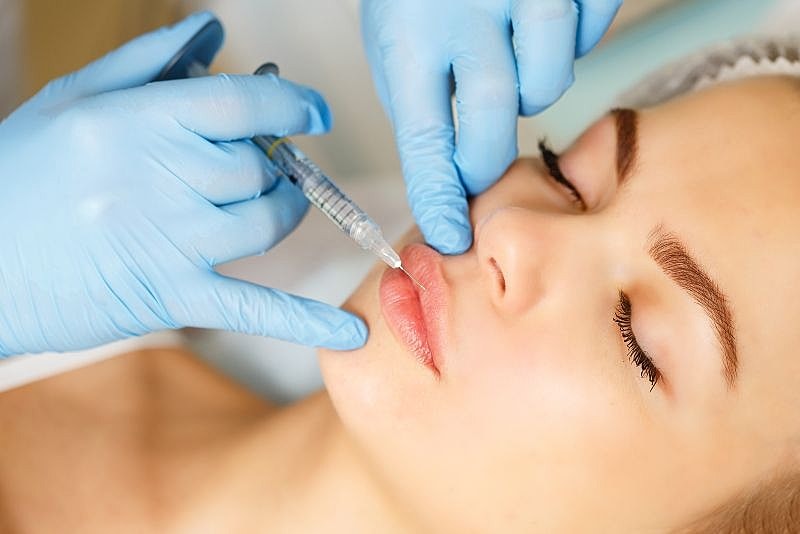
Botox and dermal filler treatments often appear side by side on a medical spa menu, but learning to perform them calls for two distinctly different sets of skills. The products behave differently, the injection techniques differ, and each treatment carries its own clinical considerations.
For most medical professionals entering aesthetic medicine, Botox training provides the strongest place to begin. It introduces the essential habits behind safe aesthetic injectables, including facial assessment, precise treatment planning, conservative dosing, patient communication, and hands-on injection training.
Botulinum toxin treatments follow a highly structured clinical framework. During Botox training, healthcare professionals learn how specific muscles contribute to facial expression and how weakening an anatomical muscle site can soften a dynamic line. Every injection still requires precision, but the relationship between muscle movement, product placement, and the expected response is relatively direct.
This makes neurotoxin education an ideal bridge between traditional procedural medicine and facial aesthetics. Physicians, dentists, nurse practitioners, registered nurses, and physician assistants can build upon skills they already use in clinical practice, including patient assessment, medical history review, sterile preparation, pain management, and the administration of injections.
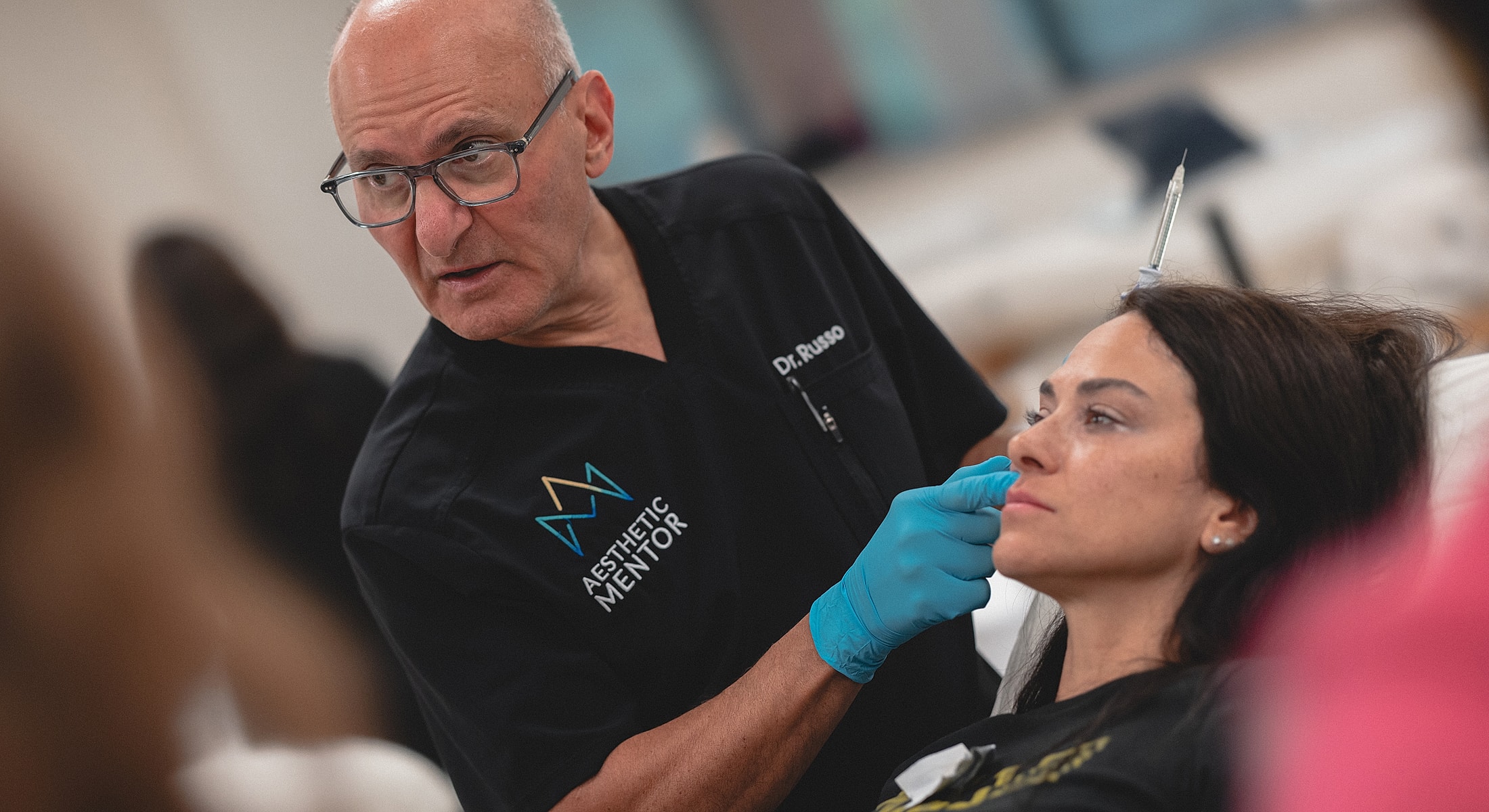
The Neurotoxin Training course at Aesthetic Mentor is specifically positioned as the first course in an injector’s education. Led by Harvard-trained, board-certified plastic surgeon Dr. Joseph A. Russo and his team of experienced mentors, the course combines academic instruction with hands-on training in a clinical setting.
Learning neurotoxins first also gives providers time to develop an aesthetic eye. You begin observing facial movement more closely, recognizing asymmetries, mapping anatomical muscle sites, and considering how one adjustment may influence the face as a whole. These habits become indispensable once you begin working with dermal fillers.
A comprehensive Botox training course begins with the science of botulinum toxin. Students study product reconstitution, dosage, storage, treatment protocols, facial anatomy, safety protocols, and the prevention and management of complications. They also learn how other neuromodulators and related injectable treatments temporarily alter neuromuscular signaling.
The clinical portion turns that knowledge into practical skills. Working with live patients allows students to perform a facial assessment, develop individualized treatment plans, identify appropriate injection points, and refine their proper injection technique under close supervision. Direct feedback during a hands-on session helps new injectors correct small habits before those habits become established in practice.
For licensed healthcare professionals, this experience can make the transition into medical aesthetics feel far more manageable. You aren’t simply memorizing where injections are commonly placed. You’re learning how facial anatomy, muscle strength, dosage, and patient goals interact during a real treatment.
Dermal filler training expands the focus from facial movement to facial structure. Students examine volume loss, skeletal support, fat compartments, skin quality, symmetry, and proportion before selecting a product or opening a syringe. Because dermal fillers may be placed at different depths and with different tools, successful treatment requires a sophisticated understanding of anatomy and tissue behavior.
A foundational Dermal Fillers Training course covers the properties of commonly used dermal filler products, including the rheology of hyaluronic acid formulations. Medical professionals learn how product characteristics influence placement and how dermal filler techniques change across treatment areas.
Hands-on dermal filler training includes the assessment and correction of nasolabial folds, marionette lines, lip volume, facial contours, and other signs of age-related volume loss. Students also learn how to create a comprehensive treatment plan instead of viewing each crease or hollow in isolation.
Safety receives particular attention throughout dermal filler training. The face contains intricate vascular networks, and dermal filler injections require accurate depth, controlled placement, and constant awareness of the surrounding anatomy. A quality dermal filler training course should prepare students to recognize warning signs of vascular occlusion, follow emergency protocols, understand appropriate product selection, and protect patient safety at every stage of treatment.
Neurotoxin training can present a steeper learning curve than dermal filler training. Injectors must understand how facial muscles interact, calculate doses with care, and anticipate how treatment in one area may affect movement elsewhere. Results also develop over several days, so the injector cannot assess the full effect or make changes during the appointment.
Complications can include facial asymmetry, brow heaviness, eyelid ptosis, altered expression, and problems with speaking or swallowing in rare cases. Neurotoxin effects cannot be dissolved, which means an unwanted outcome may remain until the product wears off. Dermal fillers provide immediate visual feedback, and many hyaluronic acid fillers can be dissolved when correction is needed.
Filler training still requires detailed knowledge of facial anatomy, injection depth, product selection, tissue resistance, and vascular safety. Accidental injection into a blood vessel can cause serious complications, so neither treatment should be approached as low risk. A strong training program gives students supervised experience with both products while teaching them to recognize complications, respond to adverse events, and make sound treatment decisions.
Many successful careers in aesthetic medicine begin with Botox training, followed by additional hands-on practice through supervised clinics or mentorship. Once the provider can confidently assess muscle movement and perform common neurotoxin treatments, dermal filler training becomes the next major step.
After completing a dermal filler certification course, providers may continue into dermal filler practice clinics, intermediate dermal filler courses, and advanced training. Repeated experience with live patients is essential because no two faces carry volume, age, or move in precisely the same way. Each hands-on session strengthens clinical judgment and helps the injector create increasingly nuanced treatment plans.
As their skills advance, providers begin combining Botox and dermal filler treatments. Botulinum toxin can soften dynamic lines caused by muscular activity, while dermal fillers can restore support or refine contours in areas affected by volume loss. Understanding both modalities allows healthcare professionals to recommend a cohesive plan based on the patient’s anatomy instead of relying on a single product for every concern.
For most licensed medical professionals, the clearest progression begins with foundational neurotoxin education. Complete Botox training, gain hands-on experience with live patients, and strengthen your understanding of facial movement before moving into dermal filler training.
Your next step is a foundational dermal filler training course with extensive anatomy education and supervised injections. From there, continued live patient training helps reinforce product selection, injection techniques, complication management, and the development of balanced therapeutic outcomes. Intermediate and advanced dermal filler courses can follow as your experience grows.
This sequence is especially valuable for physicians, dentists, nurse practitioners, physician assistants, nurses, and other licensed healthcare professionals building a complete aesthetic practice. Scope-of-practice requirements vary, so every provider should confirm current state licensing and supervision rules before performing aesthetic procedures.
A strong career in medical aesthetics develops through carefully sequenced education, close mentorship, and substantial hands-on practice. Beginning with botulinum toxin gives you the clinical framework needed to approach dermal fillers with greater confidence, sharper assessment skills, and a deeper appreciation for facial anatomy.
At Aesthetic Mentor in Hartford, CT, and Boston, MA, Dr. Joseph A. Russo and his faculty guide medical professionals through both foundational training courses and advanced education. Begin with Botox and neurotoxin training, then continue into dermal filler training as you build a broader, safer, and more sophisticated approach to aesthetic medicine. If you have any questions about aesthetic courses or getting started, visit our page for more information or give us a call today.