Published
6 minute read
The first year in aesthetic medicine asks you to think differently about skills you may have used throughout your entire clinical career thus far. You already know how to care for patients, manage risk, and work with precision, but injecting adds a new layer. Every decision has to account for anatomy, movement, product behavior, and the patient’s expectations.
There is no shortcut around that learning curve. Certification gives you a foundation, while your habits during the months that follow shape the kind of injector you become. The most common early mistakes tend to happen when providers rush through that stage instead of giving each skill enough time to settle.
Continuing education is an important part of a career in aesthetics, but taking one course after another can create the impression that progress is measured by the number of certificates you collect. A new technique will fade quickly without enough practice to understand how it behaves in your hands.
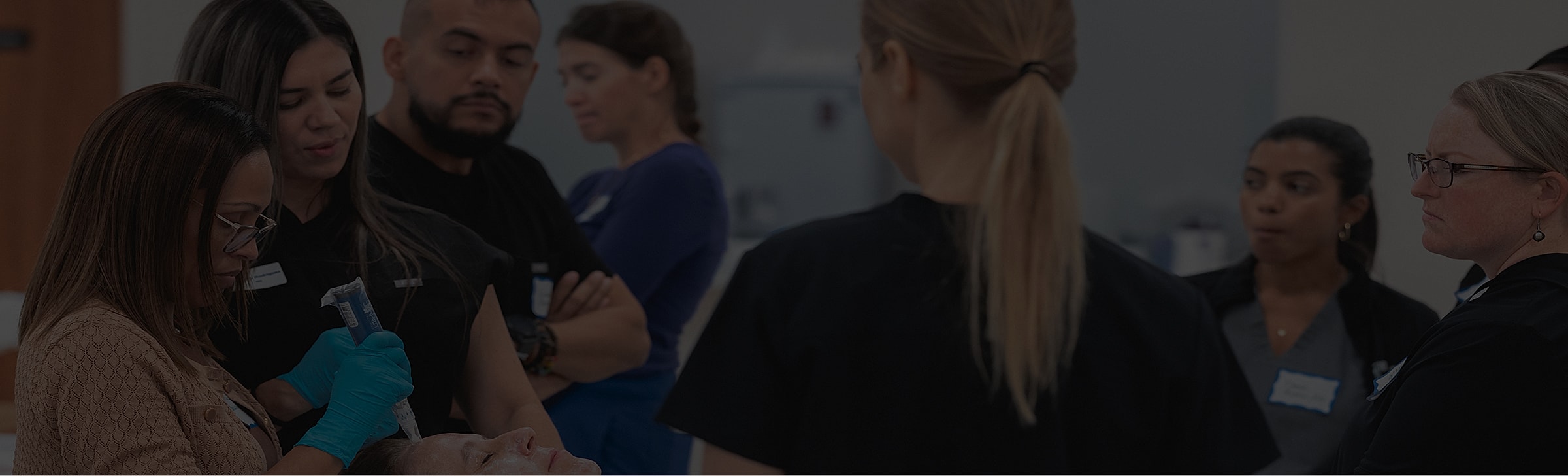
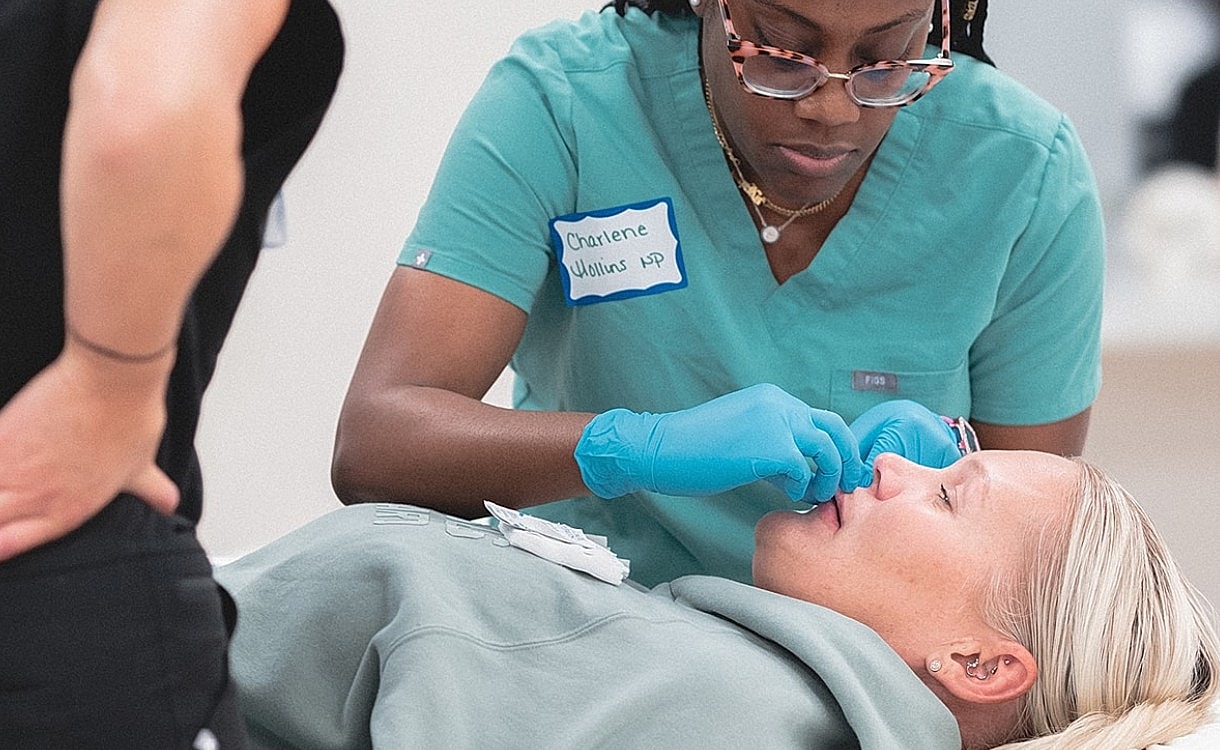
After a foundational course, make room for repetition. Practice the assessment process and become comfortable with the techniques you were taught before adding another advanced service. Supervised clinics are especially valuable during this stage because you can work with different faces while an experienced educator corrects your approach.
The right pace will look different for every provider. A nurse who joins a busy plastic surgery practice may gain clinical exposure faster than someone building a part-time injectable business. Choose your next course in response to a gap you have identified in practice.
Facial anatomy is easy to approach as prerequisite material: study the diagrams, pass the course, and move on to injection technique. In practice, anatomy has to remain active in your thinking during every assessment and treatment.
Real faces rarely resemble the clean illustrations in a textbook. Vascular pathways, muscle strength, skeletal support, and tissue thickness vary between patients. Age, previous procedures, and natural asymmetry can further influence your plan. Understanding those differences helps you choose an appropriate product, depth, dose, and placement.
Anatomy knowledge also supports complication prevention and recognition. Neuromodulators require accurate assessment of facial movement to reduce the risk of unwanted weakness or asymmetry. Dermal filler injections carry the rare but serious risk of unintentional placement in a blood vessel, which makes vascular anatomy and early recognition of an occlusion essential.
Revisiting anatomy throughout your career strengthens your clinical judgment. Focused coursework and cadaver training can reveal details that become more meaningful once you have treated patients yourself.
Injection maps can help a new provider organize foundational information, but they cannot replace a complete facial assessment. Standard points and doses do not account for muscle strength, asymmetry, or how an adjustment in one area may affect the overall expression.
The same principle applies to fillers. Treating a visible line without examining the structure around it can lead to unnecessary product use or an unbalanced result. Evaluate the face at rest and in motion, ask about prior procedures, and build a conservative plan around your findings.
This is where aesthetic medicine becomes more than a series of memorized techniques. Strong injectors understand the reasoning behind each placement and can explain why a familiar treatment pattern should be modified for a particular patient.
New injectors understandably devote a great deal of attention to the technical moment of treatment. The consultation deserves the same care because patient selection, medical history, informed consent, and clear expectations all influence the quality and safety of the experience.
A thorough consultation can also uncover situations in which treatment should be adjusted or postponed. It gives you time to identify unrealistic expectations, discuss the limits of a product, and confirm that the requested procedure fits the patient’s anatomy. These conversations protect the patient and help establish the trust that brings people back to your practice.
Follow-up is part of this process as well. Reviewing the settled result teaches you how your plan performed and gives you information to carry into future cases.
The first year brings questions that are difficult to answer through videos or social media. You may encounter an unfamiliar response to treatment or need help deciding if a patient is ready for an advanced procedure. Access to a mentor gives you a reliable place to work through those decisions.
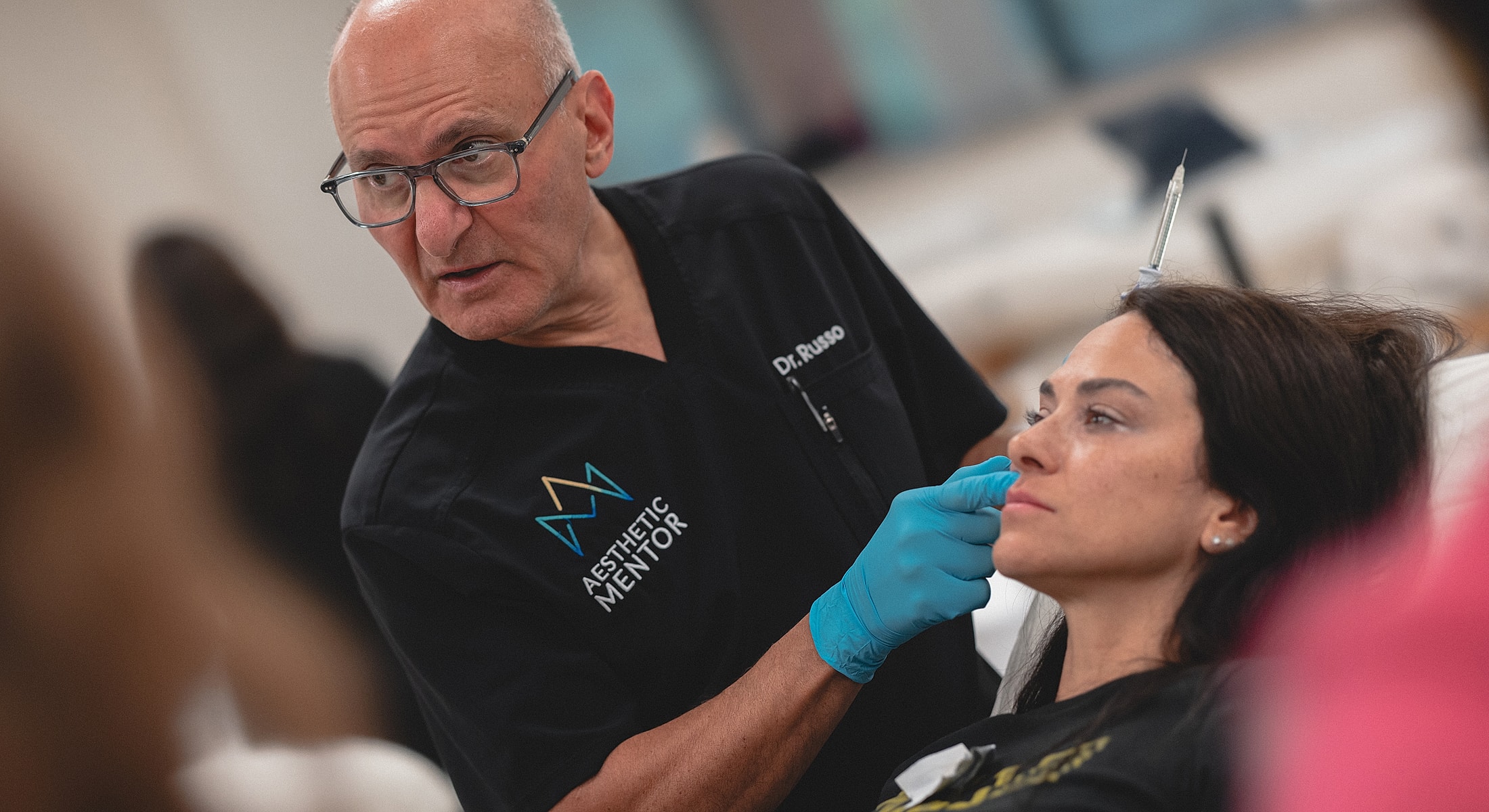
Good mentorship includes honest feedback. An experienced injector can spot small issues in your assessment, hand position, depth, or treatment sequence before they become established habits. Mentors also bring the judgment that comes from seeing many outcomes over time.
Seek guidance from educators and clinicians whose work reflects the standards you want to develop. The relationship should support questions, case review, and thoughtful progression instead of pressuring you to offer every trending treatment immediately.
Aesthetic medicine continues to change. New products enter the market, safety guidance develops, and techniques are refined as clinicians gain experience. The knowledge from your first certification course needs regular reinforcement to remain useful.
Continuing education can deepen your anatomy knowledge, strengthen complication management, and help you add services in a logical sequence. Concepts that felt abstract during your first course may become much clearer after several months of patient care.
Choose education according to your current ability and clinical goals. If you need repetition, attend a practice clinic. If anatomy remains a weak point, return to structured anatomy training. Advanced courses are most productive once your foundational assessment and injection skills are consistent.
Aesthetic Mentor has trained more than 3,000 medical professionals through a curriculum built around patient safety, hands-on experience, and continued mentorship. Led by Harvard-trained, board-certified plastic surgeon Dr. Joseph A. Russo, the program combines online instruction with live clinical training in Boston and Hartford. Classes maintain a low student-to-educator ratio, never higher than 2:1 and sometimes 1:1, so students receive direct feedback as they work with real models.
Your education can continue through the Neurotoxin Practice Clinic, Dermal Filler Practice Clinic, and Applied Anatomy for Facial Aesthetics: A Cadaver Dissection Course. You can retake the cadaver course as many times as you find beneficial. Students frequently return as their clinical skills develop because each experience brings a fresh perspective and draws their attention to different anatomical details.
Additional coursework can follow your experience level and the skills you want to strengthen next. If you are planning your first year in aesthetics or deciding what to study, complete our free career assessment to receive a personalized course recommendation.