Published
8 minute read
Open almost any nursing forum or aesthetics group and the same worry appears: everyone seems to be taking an injector course, yet every job posting asks for experience. For an aspiring aesthetic nurse, the conclusion seems to point to cosmetic nursing being already oversaturated.
The more accurate answer is less dramatic. Aesthetic nursing is competitive for first-time injectors in many markets. It is also part of a medical aesthetics industry that continues to grow. The American Med Spa Association describes the U.S. industry exceeding $17 billion in annual revenue and adding more than $1 billion each year. Growth, however, does not make every new certificate equally valuable or guarantee an immediate injector position.
What looks like oversaturation is often a crowded entry level. Many applicants have introductory education. Far fewer can show substantial hands-on experience, sound clinical judgment, knowledge of facial anatomy, and the ability to manage a consultation from assessment through follow-up. This article explains that gap, what employers evaluate, and how a new injector can prepare for a realistic first year.
Nurses see injectors on social media treating full schedules and building personal brands. Training programs are easy to find, and online courses can make the transition appear quick, but the polished version of the career travels farther than the slow work behind it.
At the same time, aesthetic practices tend to be much smaller than hospitals. Med spas, dermatology offices, plastic surgeons, and private practices may hire one injector rather than a full unit of registered nurses. Openings can attract applicants from bedside nursing, emergency medicine, surgery, dermatology, and other clinical settings. Competition is especially noticeable in cities such as Boston and Hartford, where healthcare talent and aesthetics businesses are concentrated.
Local conditions vary. One market may have many established injectors and few supervised roles for beginners. A nearby area may need providers who offer excellent patient care and help a growing practice retain clients. National growth cannot describe the hiring environment within commuting distance of your home.
This is why the question “Is aesthetic nursing oversaturated?” needs a second question: oversaturated with what? There may be many people interested in injecting. There are fewer candidates who have invested in live-patient training, continued practice, mentorship, and the professional skills required to earn patient trust.
Completing a training course is an important first step that shows initiative and provides a foundation in products, anatomy, assessment, injection safety, and treatment planning. Certifications do not expand a registered nurse’s legal scope of practice or prove independent clinical readiness.
Employers understand that distinction. They expect a new aesthetic nurse to need support and want evidence of responsible preparation before the workplace becomes the next stage of education.
That evidence may include supervised injections on live models, repeated practice with common treatment areas, knowledge of complication protocols, careful documentation, and a willingness to accept feedback. Bedside experience remains useful. Medication safety, sterile technique, patient assessment, monitoring vital signs, emergency response, and clear communication all transfer into aesthetics when paired with procedure-specific education.
For nurses still mapping the requirements, Aesthetic Mentor’s step-by-step guide to becoming an aesthetic nurse explains the licensing, clinical experience, and specialized training involved.
An experience-based credential comes later. The Plastic Surgical Nursing Certification Board’s Certified Aesthetic Nurse Specialist credential requires an unrestricted nursing license, two years of nursing experience within the core specialties, and at least 1,000 practice hours during the previous two years. CANS eligibility illustrates why a foundational course and professional certification are different milestones.
Hiring priorities differ by practice, but strong candidates usually demonstrate more than injection mechanics.
An injector must identify contraindications, recognize an unsuitable request, obtain informed consent, document accurately, and respond when a treatment does not proceed as expected. Knowledge of complication management carries real weight because elective treatments are still medical procedures.
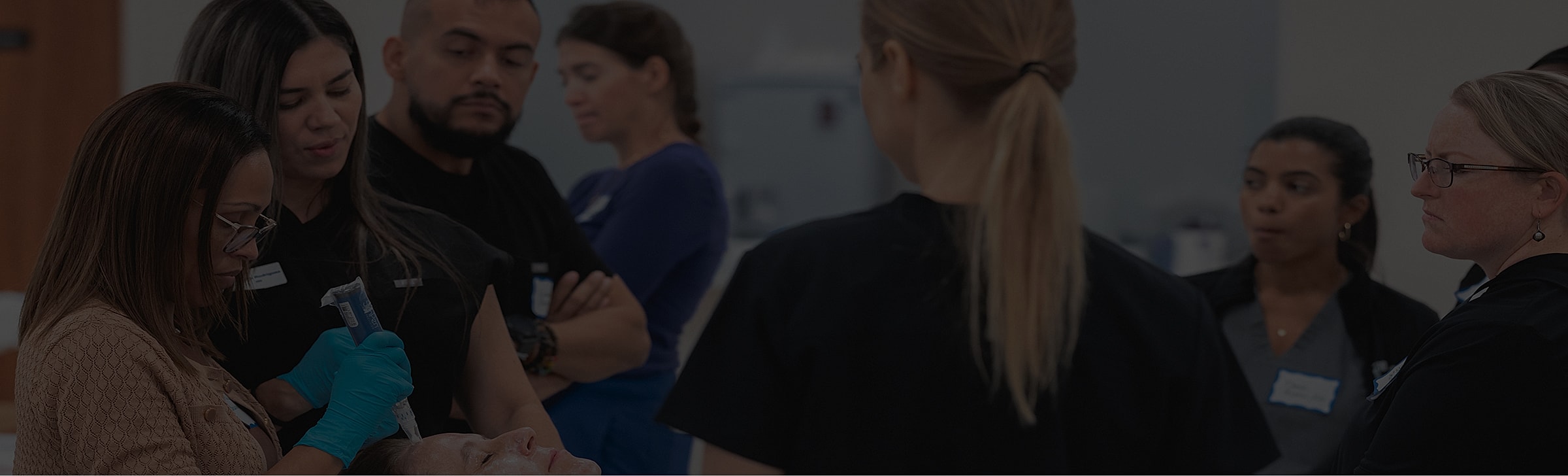
Videos can explain a technique. They cannot teach tissue resistance, needle control, patient positioning, or how to adjust when anatomy differs from the diagram. Supervised hands-on training also gives an educator the chance to correct small errors in angle, depth, assessment, and ergonomics before they become habits.
An aesthetic nurse spends significant time listening. Employers need providers who can understand a patient’s concern, assess the full face, explain limitations, and recommend a conservative treatment plan without overselling. The ability to say “not today” or suggest a different approach protects the patient and the practice.
Medical aesthetics operates in a clinical and service environment. Follow-up, photography, inventory, scheduling, client retention, and professional communication all affect the day. Aesthetic nurses typically see scheduled visits for nonsurgical cosmetic procedures, and employers need providers who support consistent patient care across the full appointment.
Soft skills do not replace clinical ability. Together, they show an employer that a candidate understands the complete position.
The strongest strategy is to make your preparation visible and verifiable. Avoid inflating case numbers or presenting a weekend course as mastery. A thoughtful employer will see through it, and the pressure to perform beyond your ability creates a patient safety risk.
Start with a coherent training sequence. Many healthcare professionals begin with foundational neurotoxin training because botulinum toxins require careful assessment, dosing, treatment planning, and precise injection techniques. Dermal filler training adds product selection, tissue depth, facial structure, and vascular safety. Dermal fillers demand a different set of decisions, so each course should build skills you can explain and demonstrate.
Then continue practicing. A supervised Neurotoxin Practice Clinic gives new injectors additional repetitions with live models and immediate instructor feedback. As clinical skills develop, anatomy education also takes on new meaning. Aesthetic Mentor’s Applied Anatomy for Facial Aesthetics cadaver course can be repeated as often as an injector finds useful. Returning students tend to notice different structures and risk relationships as their practical experience grows.
Keep a professional record of completed education, supervised procedures, and competencies, while protecting patient privacy and following employer policies. Ask educators for precise feedback. Build relationships with reputable injectors, practice managers, plastic surgeons, and dermatology teams. Networking works best when it grows from genuine professional participation rather than a string of cold messages asking for a job.
The first year in aesthetics usually develops in stages.
Progress may be slower than social media suggests. That pace is normal in a clinical field where employers and patients place a premium on experience built over time.
New England nurses should plan around both career goals and licensure. Aesthetic Mentor offers aesthetic nurse training in Boston and Hartford for licensed medical professionals, with hybrid didactic education and in-person clinical practice. Eligibility for hands-on training depends on the location and the authorization connected to your license. Holding a license from another state does not automatically rule you out, but it may require additional steps. A student advisor can review the specifics before you register.
If you’re choosing between multiple courses, the location of a course is only one factor. Ask how much supervised injection time is included, who teaches the clinical portion, how many students share an instructor, whether models are provided, and what options exist for continued practice. These details influence how well a program prepares you for the questions an employer will ask.
Absolutely. It can be a strong career path for an RN who enjoys detailed assessment, technical procedures, patient education, and long-term relationships. New injectors may keep another nursing role while gaining experience, travel for further education, or accept a part-time schedule. Average salary figures reveal little about a specific position because pay varies with location, experience, responsibilities, and compensation structure.
The field rewards consistency more reliably than novelty. Patients return to providers who listen, treat conservatively, communicate clearly, and handle concerns responsibly. Some aesthetic nurses gain regular hours and a better work-life balance than night shifts once required, but schedules differ by employer. A crowded market raises the standard without erasing the opportunity.
If you are deciding where to begin, complete Aesthetic Mentor’s free aesthetic career assessment. A student advisor can review your license, experience, preferred location, and career plans, then recommend an appropriate training path in Boston or Hartford.